How to Connect Xero with Attio (With or Without an AI Agent)
Connect Xero invoices and payments to Attio records so account health lives in your CRM, with an AI agent that pauses for a human before a payment reminder reaches a customer.
How do you connect Xero to Attio?
You connect Xero to Attio by having Xero’s On Invoice Created and On New Payment Received triggers drive Attio actions: the workflow calls Get Invoice and Get Contact for the details, Query Records to find the matching company, Update Record to set balance and payment status on the account, and Create Note to log the invoice itself. FlowRunner is a visual AI-agent orchestration platform where automations run autonomously and pause for human judgment on the steps that carry real consequence. When the same connection runs as an AI agent, the agent also watches what goes unpaid, and it stops for a named human before Email Invoice puts a payment reminder in a customer’s inbox.
The problem it solves
In most companies the CRM and the accounting system describe the same customers and never speak. A rep opens an expansion conversation with an account that has two invoices sitting ninety days overdue, and finds out from an awkward reply. Finance chases a payment from a customer who is mid-renewal, and the account owner finds out after the customer forwards the dunning email with a one-line ”?” on top. Someone in ops is supposed to bridge the two systems with a weekly report, and the report is stale the day it ships.
The edges compound it. A payment lands in Xero but the CRM still shows the account as delinquent, so the reminder goes out anyway. A contact renamed in one system stops matching in the other, and their invoices quietly fall out of every report. Credit notes get issued and nobody updates the account story. None of these are accounting errors. They are relationship errors caused by two systems that each hold half the truth.
How it works: the connection
The connection listens to Xero and writes to Attio. Here is the plain version, grounded in the real connector actions.
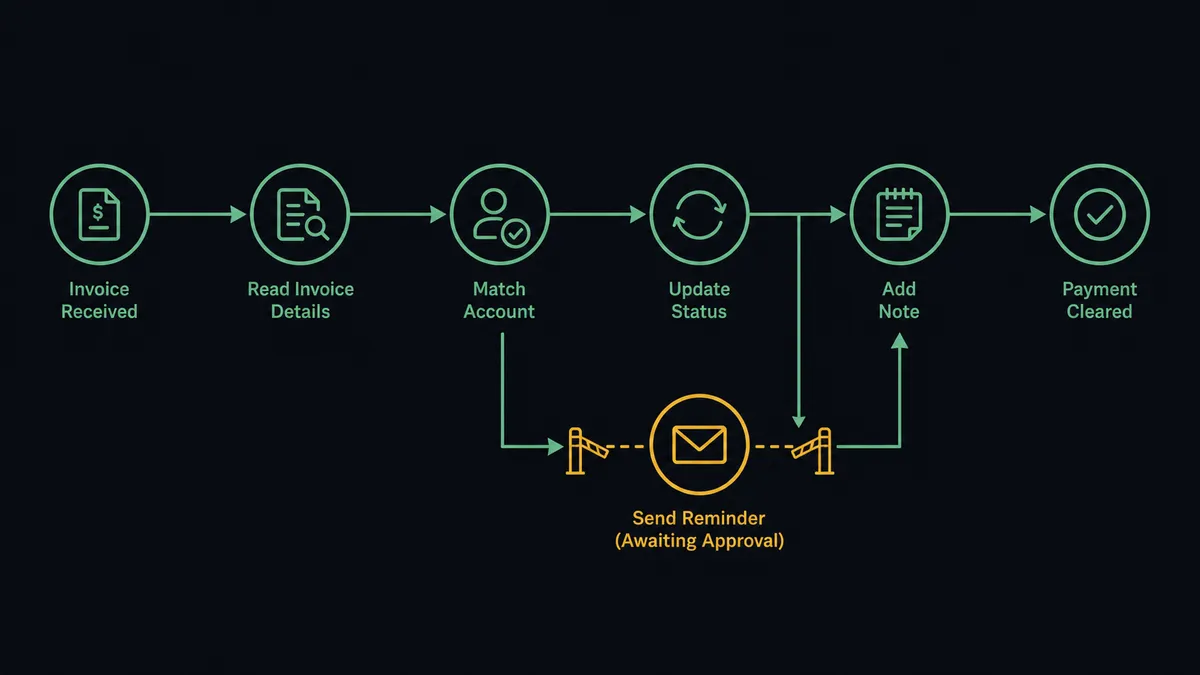
- Trigger: Xero fires On Invoice Created when a customer is billed.
- Read: The workflow calls Get Invoice for the amount and due date, and Get Contact for the customer.
- Match: It calls Query Records in Attio to find the company tied to that contact.
- Update: It calls Update Record to set the outstanding balance and payment status attributes on the account.
- Log: It calls Create Note with the invoice number, amount, and due date, so the record carries the detail.
- Clear: When On New Payment Received fires, the workflow updates the same attributes and notes the payment, so the account shows current again without anyone checking Xero.
That is the “just connect them” answer. Billing events become CRM attributes, and every rep sees the money story next to the relationship story. A receivables digest works the same way on a schedule: Get Aged Receivables pulls the aging picture and the workflow maps it onto the accounts your team actually owns.
Can an AI agent run it? (and why a human stays in the loop)
Yes, and the overdue path is where the agent earns its place. A rule that fires a reminder at thirty days past due treats your best customer and a habitual non-payer identically. An AI agent holds Get Aged Receivables, Get Invoice, Query Records, Update Record, Create Task, and Email Invoice as tools, and it reads the whole account before acting: the balance, the payment history, and what the Attio record says is happening in the relationship right now.
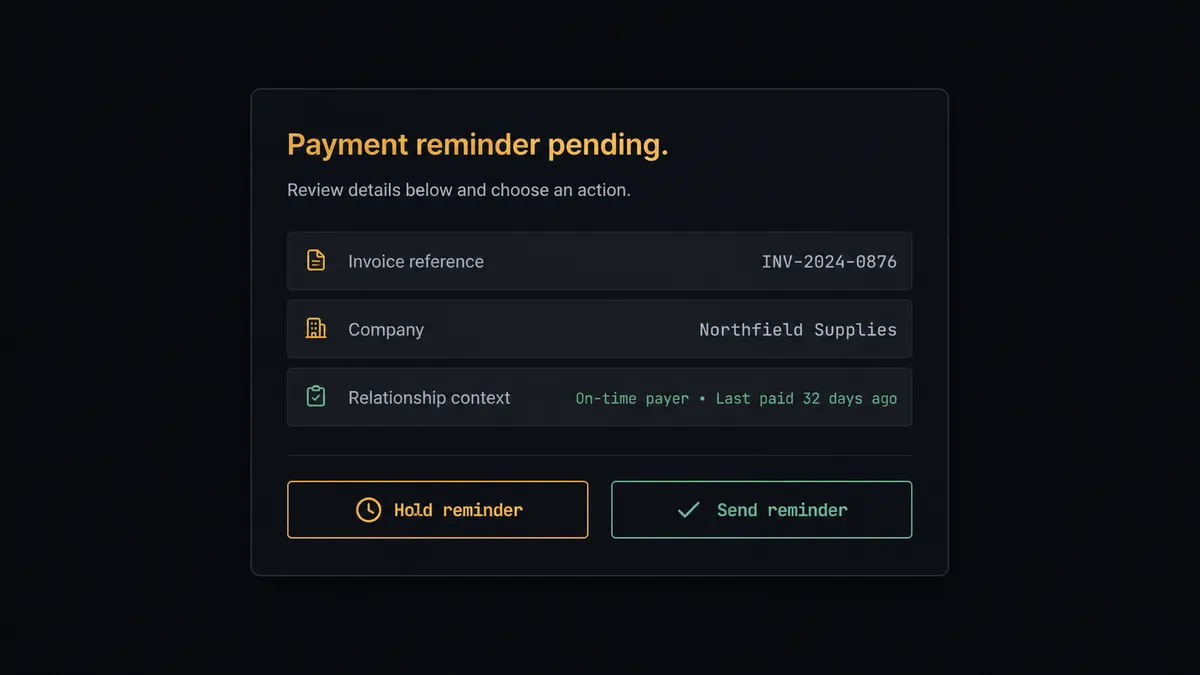
The consequential step is Email Invoice, because it reaches your customer. Before the agent sends any reminder, it invokes a human-in-loop flow it holds as a callable tool. The workflow pauses and posts to the finance channel: “Invoice [number] for [company] is past due. The Attio record shows an open renewal task owned by [rep]. Recommend holding the reminder and routing to the account owner instead. Approve the hold or approve the send.” A named approver decides. If the send is approved, Email Invoice runs and Create Task logs the follow-up on the record. Either way, the decision, the approver, and the timestamp land in the audit trail.
This is escalation on context, not on a threshold. A routine overdue invoice on a transactional account goes to the approver as a one-click send. The same balance on an account with an active expansion conversation arrives flagged, with the note history attached. Prospects call this the digital andon cord: like Toyota’s cord on the line, the workflow stops the moment the situation is uncertain, and a person restarts it knowing exactly what the agent saw.
FlowRunner vs Zapier
Zapier is the obvious first stop, and it has real strengths for this pair: a huge connector library, solid Xero and Attio support, and templates that stand up an “invoice created, update a record” push quickly. If all you want is invoice status visible on the account, a Zap delivers that.
The difference is judgment at the customer-facing step. FlowRunner is built around native human-in-the-loop and AI-agent orchestration, where the agent reads the relationship before anything reaches the customer.
| What matters for this pair | FlowRunner | Zapier |
|---|---|---|
| Human-in-the-loop before Email Invoice reaches a customer | Native. The agent invokes an approval flow as a callable tool and pauses with account context attached | Available via added approval steps or paths, not a native agent decision |
| Who runs the flow | An AI agent reads balance plus relationship, reasons, picks actions as tools | Predefined step sequence you configure per Zap |
| Users included | Unlimited users on every tier | Priced by task volume; seats vary by plan |
| Bring your own AI keys | Yes, BYOK | AI features tied to Zapier’s own AI offering |
| Self-hosted option | Yes, cloud-hosted or self-hosted | Cloud only |
| Pricing model | Transparent workflow-based tiers | Per-task pricing that scales with invoice volume |
If you invoice a handful of customers and nobody automates reminders, Zapier covers the visibility use case fine. If receivables chasing touches accounts your team is actively selling into, the gate before Email Invoice is the part you will be glad exists.
Before and after
Here is what changes operationally when the connection is live.
| Category | Before | After |
|---|---|---|
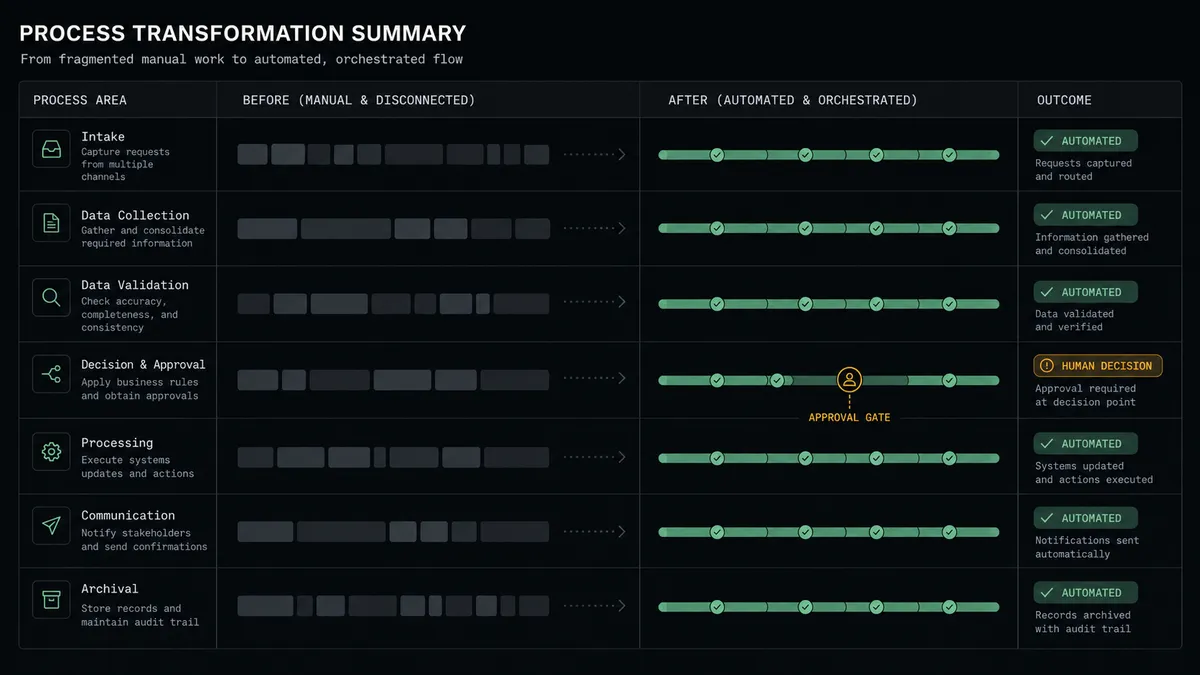
| Account visibility | Reps open Xero, or ask finance, to learn whether an account is paid up | Update Record keeps balance and payment status on the Attio record as events happen |
| Reminder collisions | Dunning emails land on accounts mid-renewal and reps find out from the customer | The agent surfaces relationship context and a named approver decides before Email Invoice runs |
| Payment lag | Paid invoices stay marked overdue in team reports until the weekly refresh | On New Payment Received clears the status within the workflow run |
| Receivables review | Someone assembles an aging spreadsheet and maps it to owners by hand | Get Aged Receivables feeds a digest mapped onto Attio accounts on a schedule |
| Paper trail | Nobody can reconstruct who approved chasing which account | Every reminder carries the invoice reference, approver, and timestamp |
What you can build
Invoice status on every account. On Invoice Created fires. The agent matches the contact with Query Records, sets balance attributes with Update Record, and logs the invoice with Create Note, so the CRM always tells the money truth.
Relationship-aware collections. On a schedule, the agent pulls Get Aged Receivables, cross-reads each overdue account’s Attio notes and tasks, and queues reminders through the approval gate, holding the ones that would collide with live conversations.
Payment-to-celebration. On New Payment Received fires for a first invoice. The agent clears the status, logs the payment, and creates a task for the account owner to send a welcome note while the moment is warm.
Contact hygiene both ways. On Contact Created or On Contact Updated fires in Xero. The agent matches against Attio with Query Records and proposes an Assert Record (Upsert) so the two systems stop drifting apart on names and emails.
Credit note context. On Credit Note Created fires. The agent logs the credit with Create Note on the Attio company and flags accounts accumulating credits for a human look, since repeated credits usually mean a relationship problem the CRM should know about.
Getting started
Start on the free plan: 100 executions a month, every integration included, no credit card required, plus 14 days of Professional for new accounts. Both connectors are available on every tier, and every tier includes unlimited users and unlimited workflows, so finance and the revenue team can finally watch the same accounts in the same workflow.
Explore the integration details:
- Xero integration (8 triggers and 38 actions across invoices, payments, and reports)
- Attio integration (26 actions across records, lists, notes, and tasks)
Start building free at flowrunner.ai or book a demo to see a live Xero to Attio workflow, reminder approval and all.
Frequently asked questions
Is it free to connect Xero and Attio on FlowRunner?
You can build and run the connection on FlowRunner's free plan, which includes 100 executions a month and every integration with no credit card required, and new accounts also get 14 days of Professional. Both connectors are available on every FlowRunner tier, and every tier includes unlimited users and unlimited workflows.
Can I self-host the Xero to Attio workflow?
Yes. FlowRunner offers a cloud-hosted option and a self-hosted option, so the connection can run inside your own environment.
Does the AI agent need my own OpenAI or Claude key?
FlowRunner uses a bring-your-own-keys model, so you connect the AI provider key you already have. You are not locked to one model.
Will the agent chase a customer we are in the middle of a renewal conversation with?
No. Before any reminder goes out, the agent reads the Attio record, including recent notes and open tasks, and posts its recommendation to a named approver. If the account is mid-negotiation, the approver holds the reminder and the agent logs the hold on the record.
Which Xero events can trigger an Attio update?
Xero offers eight triggers, including On Invoice Created, On Invoice Updated, On New Payment Received, On Contact Created, On Contact Updated, On Credit Note Created, On Credit Note Updated, and On New Bank Transaction. On Invoice Created and On New Payment Received are the two most teams start with for account health.
Does the workflow write anything back into Xero?
It can. The agent holds Xero actions like Email Invoice and Create Contact as tools. Email Invoice is the consequential one, since it reaches your customer, so it sits behind the human-in-loop step and only runs after a named approver signs off.